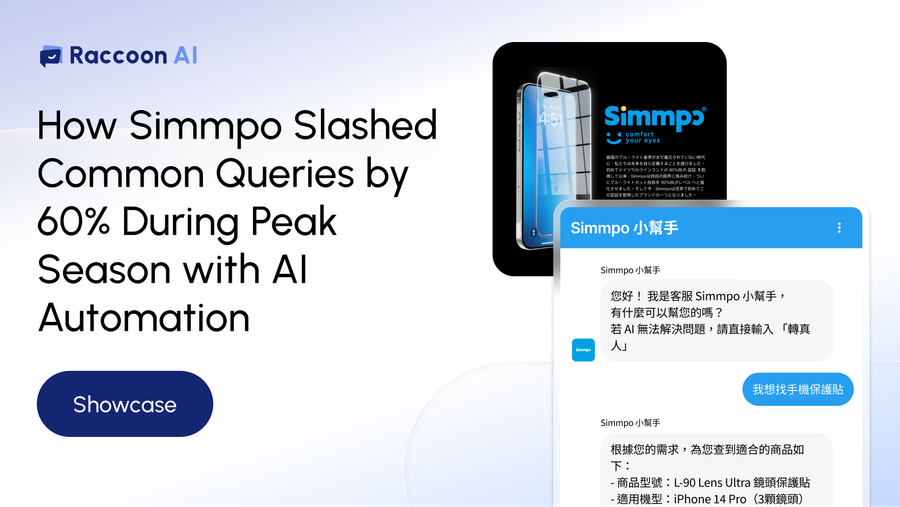
In e-commerce, customer service is no longer just a back-office support function for replying to messages; it is now a critical driver of customer experience, brand trust, and operational efficiency. For Simmpo, a brand focused on eye-care and blue-light protection accessories for mobile devices, this challenge becomes especially pronounced during peak seasons. Around each new iPhone launch, the brand’s total inquiry volume can grow to three to five times its normal level. When traffic and...
Customer Stories
As generative AI matures, more companies are adding AI customer service bots to their support operations. From social DMs and website chat to self-service inquiries, AI can now help handle up to 60–80% of routine questions, significantly reducing workload and wait times. However, as AI customer service becomes mainstream, many companies are asking new questions: Will AI customer service replace human agents? Which issues should be handled by AI? Which ones must be handled by humans? And how can teams prevent AI from giving incorrect answers or going in circles? In reality, AI will not replace human customer service—but it will redefine support roles and change how the entire service workflow is designed. This article takes a practical perspective and helps you quickly understand: The role differences, strengths, and limitations of AI customer service and human agents 3 common misconceptions about whether AI will replace humans Script design principles that keep AI customer service stable and accurate The best collaboration workflow for AI × human customer service <Image source> AI Customer Service Bots vs. Human Agents: Strengths, Limitations, and Role Positioning In a support system, AI customer service and human agents are not competing with each other. They are responsible for different types of work. The value of AI customer service lies in efficiency and scale—it can instantly handle high-volume, repetitive, standardized questions. The value of human agents lies in understanding and judgment—they can manage situations that require emotional awareness, flexible decision-making, and brand communication. Comparison of AI and human customer service features and use cases...
Insights
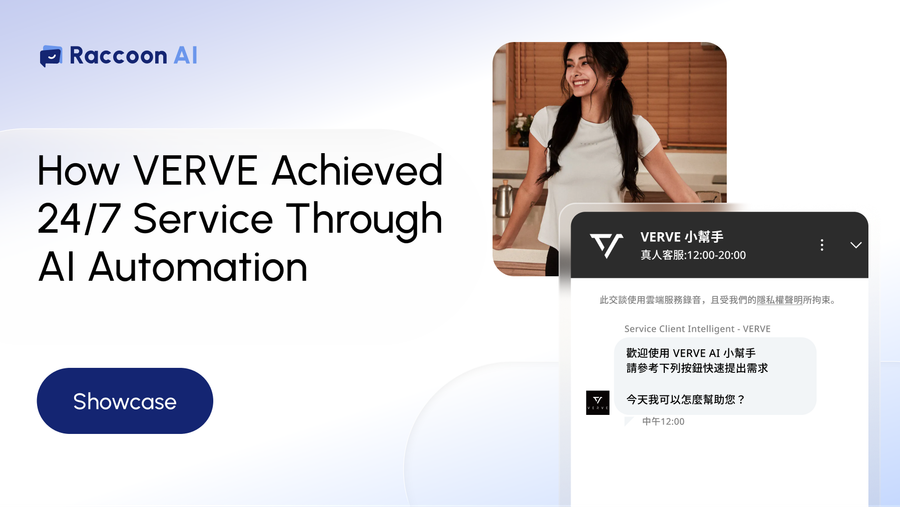
Since OpenAI launched ChatGPT at the end of 2022, the world has entered a new era of AI transformation. Enterprises across industries began asking a critical question: “What tangible impact can AI bring to brand operations?” Taiwanese apparel brand VERVE moved early in this wave. Starting with the need to reduce overreliance on manual customer service workflows, VERVE partnered with Raccoon AI to integrate artificial intelligence into daily operations. By structuring internal knowledge and transforming the end-to-end customer service experience, the brand reduced workload for its support team while delivering faster, more consistent service quality.
Customer Stories
As e-commerce accelerates, conversational AI chatbots are becoming a critical tool for transformation. This article explores how the technology improves user experience and increases sales conversion through real-time engagement, personalized recommendations, and automated service. We will also highlight real-world success stories that demonstrate its business value.
Insights
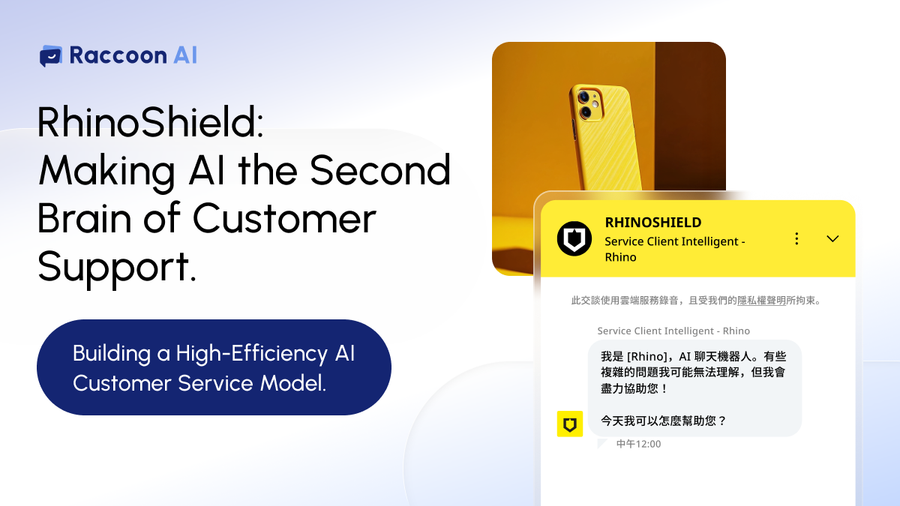
Since the debut of OpenAI’s ChatGPT at the end of 2022, an AI revolution has officially swept the globe. Major enterprises have begun to reflect: Exactly what substantial changes can AI bring to brand operations? RHINOSHIELD, a Taiwanese mobile accessory brand focused on material science, took the lead during this wave of innovation. Aiming to solve customer service challenges arising from peak/off-peak seasons and cross-regional operations, they partnered with Raccoon AI to integrate...
Customer Stories
Slow customer service responses, high labor costs, and unanswered messages after hours—AI customer service is changing all of this. The new generation of AI customer service (Artificial Intelligence Customer Service) combines generative AI with natural language understanding (NLU) to automatically identify customer intent, respond instantly, and even proactively guide customers to book appointments, complete forms, or make purchases. Based on real implementation results across multiple brands, AI customer service can reduce repetitive support work by more than 80% on average, while increasing conversion rates on websites or LINE Official Accounts by about 20–30%. It is not only a tool for reducing manpower needs, but also a “virtual service team” that operates 24 hours a day and maintains a consistent brand voice. Next, we will walk you through: Why has AI customer service become critical to enterprise digital transformation? How are different industries using AI customer service to drive operational results? How can you choose the right AI customer service solution? What is AI customer service, and why are more brands adopting it? AI customer service (Artificial Intelligence Customer Service) is an intelligent system that combines generative AI with natural language understanding (NLU). It understands customer intent and needs, proactively provides responses, recommends products, checks orders, and can even complete tasks such as appointment booking and payment. Traditional AI customer service vs...
Insights
What is AI customer service? AI customer service uses AI recognition systems to automatically deliver real-time responses to customers. This article explains common AI customer service system formats, the 5 key benefits of AI customer service, how AI customer service differs from human support, and recommends a global AI customer service system for your business.
Insights