Raccoon AI Blog

blog-clothes-cover

功能介紹

How to Choose AI Customer Service for Fashion E-commerce: AI Size Recommendations and Inventory Lookup (SHOPLINE, CYBERBIZ, Shopify + LINE)

Fashion e-commerce brands are often asked, “What size should I wear?” and “Is black M still in stock?” AI customer service needs to handle both: compare body measurements against size charts, connect with platforms to check products and inventory, and answer directly in the conversation. Raccoon AI supports integrations with platforms such as SHOPLINE, enabling size recommendations based on customer body type and product suggestions.

品牌流量變現指南:從引流、留存到對話成交的 5 個關鍵環節

A Brand Guide to Traffic Monetization: 5 Key Stages from Acquisition and Retention to Conversational Conversion

Traffic monetization is the process of turning visitors from your website, search, social channels, or ads into actual revenue through product sales, service bookings, and customer engagement. For brands, the priority is not only attracting more visitors, but helping high-intent shoppers find the right products, resolve concerns, and complete their purchase. Even with ongoing investment in advertising and marketing, traffic does not automatically become orders. Mismatched ad promises and product pages, unanswered questions, and overly complex checkout flows can all cause customers to leave. Brands can improve traffic monetization across five stages: precise acquisition, real-time engagement, customer retention, conversational conversion, and repeat purchase management—gradually increasing the value of every interaction. These five stages serve as an operational diagnostic framework. Customers may not move through them in order, and some may purchase on their first visit. What is traffic monetization? Why do brands have traffic but no orders? Definition and core concept of traffic monetization Traffic represents opportunities for customers to engage with a brand; monetization means turning those opportunities into revenue. Content websites may monetize through ad placements or subscriptions, while e-commerce brands typically generate revenue through product orders, service transactions, and repeat purchases. This article focuses on brand sales and how to connect visitor intent to the purchase journey. Effective traffic monetization for brands requires balancing demand fit, buying experience, and operating cost. A large volume of low-intent visitors may increase page views without driving qualified orders. Sales generated through steep discounts may also be offset by ad spend, shipping, and return costs. When measuring results, brands should evaluate both revenue and profit....

Insights

私域流量是什麼?廣告成本攀升下,品牌經營私域的 4 階段完整攻略

What Is Private Domain Traffic? A 4-Stage Playbook for Brands as Advertising Costs Rise

Private domain traffic refers to the customer base a brand can continuously engage and serve through channels such as a membership system, Email, and LINE Official Account after obtaining customer consent. The goal of private domain management is to turn a single visit or purchase into a sustainable customer relationship, gradually building repeat purchases and long-term value across four stages: traffic acquisition, retention, engagement, and conversion. As advertising costs rise and the same budget brings in fewer new customers, brands need to ask: after paid traffic leaves the website, can we contact those customers again? Yes—but only if they have voluntarily provided contact information or subscribed to brand messages. A single website visit does not mean the brand has established a directly reachable relationship. Changes to third-party Cookie and browser tracking restrictions also make it more important for brands to focus on customer-provided data and direct interactions. This article starts with the differences between public and private domains, then outlines operating methods, tools, metrics, and use cases to help brands build an actionable private domain strategy. What Is Private Domain Traffic, and Why Should Brands Invest in It? Definition and Core Concepts of Private Domain Traffic Private domain traffic is not the name of a specific platform. It is a way to manage customer relationships. When customers are willing to become members, subscribe to newsletters, or join a LINE Official Account, brands can provide service, content, and product information at the right moments without starting from a cold audience every time. However, "private domain" does not mean the brand owns the customer, nor does it mean messages can be sent for free or without limits. Third-party platforms such as LINE...

Insights

Raccoon AI GEO(WorkDuo) × Frank Chiu GEO 實戰課:從 AI 監測到優化,品牌該看懂的三件事

Raccoon AI GEO(WorkDuo) × Frank Chiu GEO Masterclass: Three Things Brands Need to Understand, from AI Monitoring to Optimization

Introduction As consumers begin asking ChatGPT and Gemini directly which brands they recommend, whether a brand appears in AI-generated answers has become a critical marketing question. On October 21, WorkDuo invited GEO consultant Frank Chiu to host an online GEO (Generative Engine Optimization) masterclass for users. Rather than focusing on concepts, the session covered how to interpret monitoring data and how to get brands mentioned by AI. Below are the key takeaways. Why GEO Matters Now AI is becoming a new entry point for consumer decision-making. In the session, Frank noted that international consulting firms have also started advising clients to prioritize GEO. In the past, brands only needed to manage their Google rankings. Today, users may never click a link and may simply trust the answer AI provides. If a brand does not appear in that answer, it is effectively not on the consumer’s consideration list. Understanding AI visibility: The four quadrants of mentions and citations Frank summarized the core GEO metrics into three areas: mentions, where the brand name appears in AI answers; citations, where AI includes a link to your website; and traditional SEO rankings. Mentions and citations create different value. Mentions build brand awareness and trust but do not directly drive traffic. Citations can generate traffic and support remarketing. Crossing the two...

Insights

Customer Stories

View more

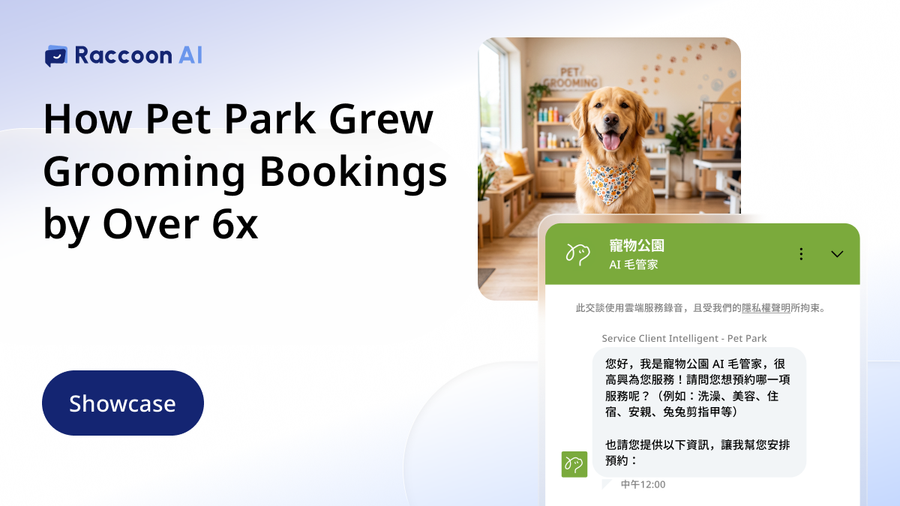
How Pet Park Grew Grooming Bookings by Over 6x

Pet Park, one of Taiwan’s leading pet retail and ecommerce chains, adopted Raccoon AI Service to transform a complex grooming booking workflow. With intelligent scripts and seamless integration into the existing customer service environment, AI now proactively collects booking details and replies instantly, helping grooming consultation conversion rise from 35.71% to 64.2%, with completed bookings up 625% and revenue up 495%.

Customer Stories

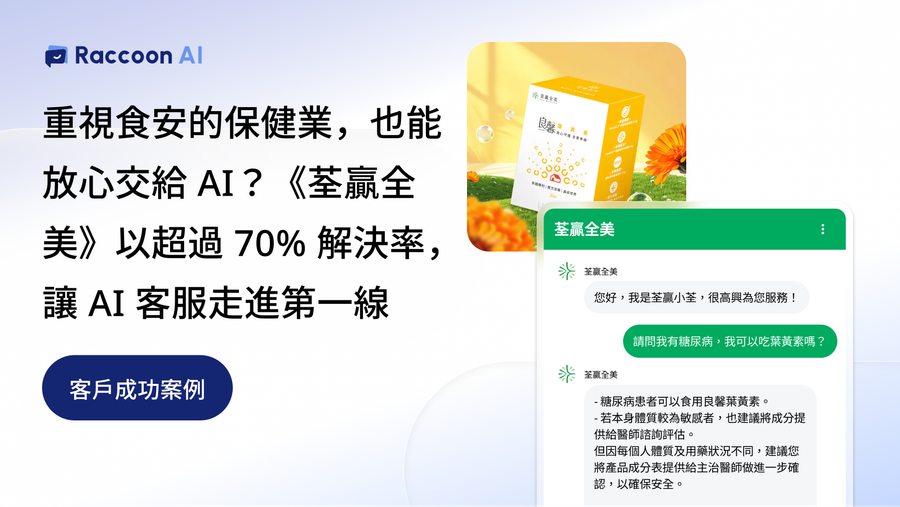
重視食安的保健業,也能放心交給 AI?《荃贏全美》以超過 70% 解決率,讓 AI 智能客服真正走進第一線

Can AI Be Trusted in a Health Supplement Business Where Food Safety Matters? 《荃贏全美》 Brings AI Customer Service to the Front Line with a Resolution Rate Above 70%

When e-commerce companies begin evaluating AI customer service, the first question on the minds of founders and management teams is often not "Can it help us reply to more messages?" but a deeper concern around compliance and trust: "What if the AI gives the wrong answer?" For brands focused on functional health supplements, products are directly tied to customers’ health and consumption safety. Customer inquiries are often highly sensitive and professional in nature—"I’m taking medication for high blood pressure. Can I still take this enzyme product?" "Can I take this collagen supplement during early pregnancy or while breastfeeding?" "Can this supplement improve symptoms of my chronic condition?" If customer service provides vague or incorrect responses, or even makes claims about efficacy, it may not only fail to protect customers’ daily health, but also damage their trust in the brand’s professionalism and potentially violate food and drug regulations. This was the non-negotiable line for Taiwan’s leading functional health supplement brand 《荃贏全美》 when adopting AI. This article shares 《荃贏全美》’s real implementation experience—from organizing complex product knowledge and precisely defining the AI’s response boundaries to ultimately achieving independent resolution of 70% of customer service questions and an average response time of 15 seconds. It also reveals how AI can fill the consultation gap outside service hours while ensuring safety and professionalism, and shorten highly complex communication workflows by more than 50%. Three Major Pain Points in Health Supplement Customer Service: Information Overload, Off-Hour Service Gaps, and Strict Compliance Guardrails Looking back at operations before AI was introduced...

Customer Stories

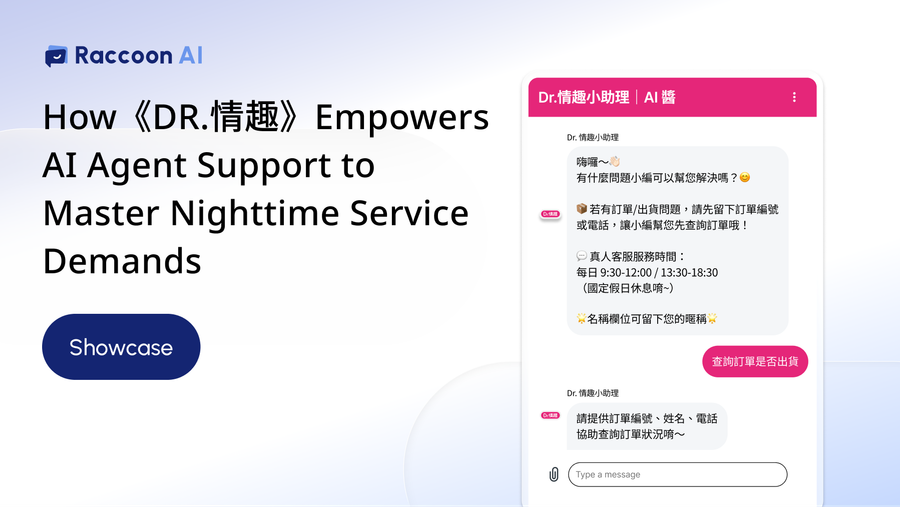
The Night Watchman: How Dr. Erotic uses Raccoon AI intelligent customer service to safeguard trust every night.

When customers walk into a website with questions in the early hours of the morning, brands can do more than just wait until dawn. The AI customer service used by Dr. Erotic is a solution tailored for e-commerce brands by Raccoon AI. Hidden service gaps in the adult industry At 2 a.m., a customer quietly opened the shopping website, hesitated for a long time staring at the product page, and finally mustered up the courage to type a question: "Will my family be able to tell from the...

Customer Stories

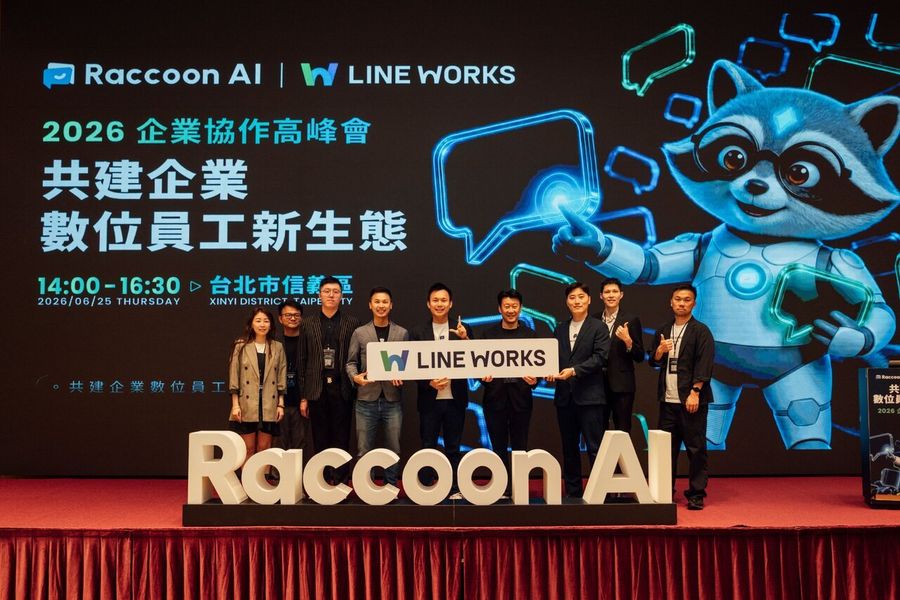
[Repost] Employees Can Orchestrate AI Directly in LINE WORKS, Bringing AI Employees Into Everyday Enterprise Work

In Taiwan, a large share of everyday workplace communication happens inside chat windows: assigning tasks through messages, confirming quotations through conversations, and tracking project progress in group chats. For most organizations, however, these conversations leave tasks scattered across chat histories. They depend heavily on human memory, while cross-system data consolidation still relies on manual copy-and-paste work. When companies try to solve these problems with AI, they often find

News

功能介紹

View more
blog-clothes-cover

How to Choose AI Customer Service for Fashion E-commerce: AI Size Recommendations and Inventory Lookup (SHOPLINE, CYBERBIZ, Shopify + LINE)

Fashion e-commerce brands are often asked, “What size should I wear?” and “Is black M still in stock?” AI customer service needs to handle both: compare body measurements against size charts, connect with platforms to check products and inventory, and answer directly in the conversation. Raccoon AI supports integrations with platforms such as SHOPLINE, enabling size recommendations based on customer body type and product suggestions.

功能介紹
blog-clothes-cover

How to Choose AI Customer Service for Fashion E-commerce: AI Size Recommendations and Inventory Lookup (SHOPLINE, CYBERBIZ, Shopify + LINE)

Fashion e-commerce brands are often asked, “What size should I wear?” and “Is black M still in stock?” AI customer service needs to handle both: compare body measurements against size charts, connect with platforms to check products and inventory, and answer directly in the conversation. Raccoon AI supports integrations with platforms such as SHOPLINE, enabling size recommendations based on customer body type and product suggestions.

功能介紹

品牌流量變現指南:從引流、留存到對話成交的 5 個關鍵環節

A Brand Guide to Traffic Monetization: 5 Key Stages from Acquisition and Retention to Conversational Conversion

Traffic monetization is the process of turning visitors from your website, search, social channels, or ads into actual revenue through product sales, service bookings, and customer engagement. For brands, the priority is not only attracting more visitors, but helping high-intent shoppers find the right products, resolve concerns, and complete their purchase. Even with ongoing investment in advertising and marketing, traffic does not automatically become orders. Mismatched ad promises and product pages, unanswered questions, and overly complex checkout flows can all cause customers to leave. Brands can improve traffic monetization across five stages: precise acquisition, real-time engagement, customer retention, conversational conversion, and repeat purchase management—gradually increasing the value of every interaction. These five stages serve as an operational diagnostic framework. Customers may not move through them in order, and some may purchase on their first visit. What is traffic monetization? Why do brands have traffic but no orders? Definition and core concept of traffic monetization Traffic represents opportunities for customers to engage with a brand; monetization means turning those opportunities into revenue. Content websites may monetize through ad placements or subscriptions, while e-commerce brands typically generate revenue through product orders, service transactions, and repeat purchases. This article focuses on brand sales and how to connect visitor intent to the purchase journey. Effective traffic monetization for brands requires balancing demand fit, buying experience, and operating cost. A large volume of low-intent visitors may increase page views without driving qualified orders. Sales generated through steep discounts may also be offset by ad spend, shipping, and return costs. When measuring results, brands should evaluate both revenue and profit....

Insights

私域流量是什麼?廣告成本攀升下,品牌經營私域的 4 階段完整攻略

What Is Private Domain Traffic? A 4-Stage Playbook for Brands as Advertising Costs Rise

Private domain traffic refers to the customer base a brand can continuously engage and serve through channels such as a membership system, Email, and LINE Official Account after obtaining customer consent. The goal of private domain management is to turn a single visit or purchase into a sustainable customer relationship, gradually building repeat purchases and long-term value across four stages: traffic acquisition, retention, engagement, and conversion. As advertising costs rise and the same budget brings in fewer new customers, brands need to ask: after paid traffic leaves the website, can we contact those customers again? Yes—but only if they have voluntarily provided contact information or subscribed to brand messages. A single website visit does not mean the brand has established a directly reachable relationship. Changes to third-party Cookie and browser tracking restrictions also make it more important for brands to focus on customer-provided data and direct interactions. This article starts with the differences between public and private domains, then outlines operating methods, tools, metrics, and use cases to help brands build an actionable private domain strategy. What Is Private Domain Traffic, and Why Should Brands Invest in It? Definition and Core Concepts of Private Domain Traffic Private domain traffic is not the name of a specific platform. It is a way to manage customer relationships. When customers are willing to become members, subscribe to newsletters, or join a LINE Official Account, brands can provide service, content, and product information at the right moments without starting from a cold audience every time. However, "private domain" does not mean the brand owns the customer, nor does it mean messages can be sent for free or without limits. Third-party platforms such as LINE...

Insights

Raccoon AI GEO(WorkDuo) × Frank Chiu GEO 實戰課:從 AI 監測到優化,品牌該看懂的三件事

Raccoon AI GEO(WorkDuo) × Frank Chiu GEO Masterclass: Three Things Brands Need to Understand, from AI Monitoring to Optimization

Introduction As consumers begin asking ChatGPT and Gemini directly which brands they recommend, whether a brand appears in AI-generated answers has become a critical marketing question. On October 21, WorkDuo invited GEO consultant Frank Chiu to host an online GEO (Generative Engine Optimization) masterclass for users. Rather than focusing on concepts, the session covered how to interpret monitoring data and how to get brands mentioned by AI. Below are the key takeaways. Why GEO Matters Now AI is becoming a new entry point for consumer decision-making. In the session, Frank noted that international consulting firms have also started advising clients to prioritize GEO. In the past, brands only needed to manage their Google rankings. Today, users may never click a link and may simply trust the answer AI provides. If a brand does not appear in that answer, it is effectively not on the consumer’s consideration list. Understanding AI visibility: The four quadrants of mentions and citations Frank summarized the core GEO metrics into three areas: mentions, where the brand name appears in AI answers; citations, where AI includes a link to your website; and traditional SEO rankings. Mentions and citations create different value. Mentions build brand awareness and trust but do not directly drive traffic. Citations can generate traffic and support remarketing. Crossing the two...

Insights

AI 導入完整指南:企業如何導入 AI?準備、策略與案例解析

Complete Guide to AI Implementation: How Enterprises Can Adopt AI—Preparation, Strategy, and Case Studies

To implement AI effectively, enterprises should first define the business problem they want to improve, assess available data and resources, then choose the right tools and implementation model. Validate impact through a small-scale pilot, then roll out gradually and optimize continuously. The core objective of AI implementation is to embed artificial intelligence into real workflows and deliver measurable gains in efficiency, quality, or revenue. Preparation: Clarify business challenges, assess data and systems, and confirm budget, owners, and success metrics. Strategy: Select priority use cases, compare in-house development, SaaS, and outsourcing, and plan pilot scope and data security. Execution: Test real tasks, train employees, define human-AI collaboration, and scale based on results. What is AI implementation, and why should enterprises adopt AI? Definition of AI implementation: integrating AI into existing processes and systems AI implementation means integrating artificial intelligence technologies into existing workflows or systems to support information understanding, content generation, data analysis, prediction, or task execution. Examples include enabling AI to answer customer questions based on an enterprise knowledge base, summarize meeting notes, or help sales teams consolidate customer needs. Implementation does not necessarily require building your own model or replacing existing systems. Enterprises can purchase ready-to-use tools or connect existing CRM, customer service platforms, and internal data through APIs to create workflows that fit their needs. The relationship between AI implementation and AI transformation AI implementation usually starts with a specific task or department; AI...

Insights

AI 轉型是什麼?與數位轉型差在哪?企業 AI 轉型重點完整指南

What Is AI Transformation? How It Differs from Digital Transformation, and What Enterprises Need to Know

AI transformation is the process of integrating artificial intelligence into daily workflows, employee responsibilities, and operational decision-making to continuously improve efficiency, service quality, and business outcomes. For enterprises, AI transformation is not just about purchasing tools; it also requires data management, human-AI collaboration, and performance tracking mechanisms. Companies can start with small-scale applications in a single department, validate results, and then expand gradually. Key takeaways: AI transformation spans processes, people, and business models, with a focus on sustainable operational change. AI transformation and digital transformation are closely connected; AI transformation focuses more specifically on applying AI to analysis, judgment, generation, and execution. The 5 key benefits of AI transformation include efficiency, decision-making, customer experience, cost management, and long-term competitiveness, but outcomes must be measured. Enterprises should define business goals first, then prepare data, assign responsibilities, select partners, and run pilots. SMBs do not need to start by building their own models; they can first evaluate practical needs such as customer service, document organization, or internal knowledge search. What is AI transformation? A clear definition AI transformation definition: redesigning how work gets done around business goals Enterprise AI transformation starts with business goals. It uses artificial intelligence to redesign how work is processed while establishing mechanisms for data management, team collaboration, and performance tracking. AI can help understand text, summarize information, predict trends, or execute authorized tasks, but businesses still need to decide which tasks are suitable for automation and which decisions should remain with people....

Insights